Update — 5 October 2026: This article discusses a reported subsidy proposal, not an open application scheme. The earlier statement that the older subsidy remains active has been removed because current availability was not verified.
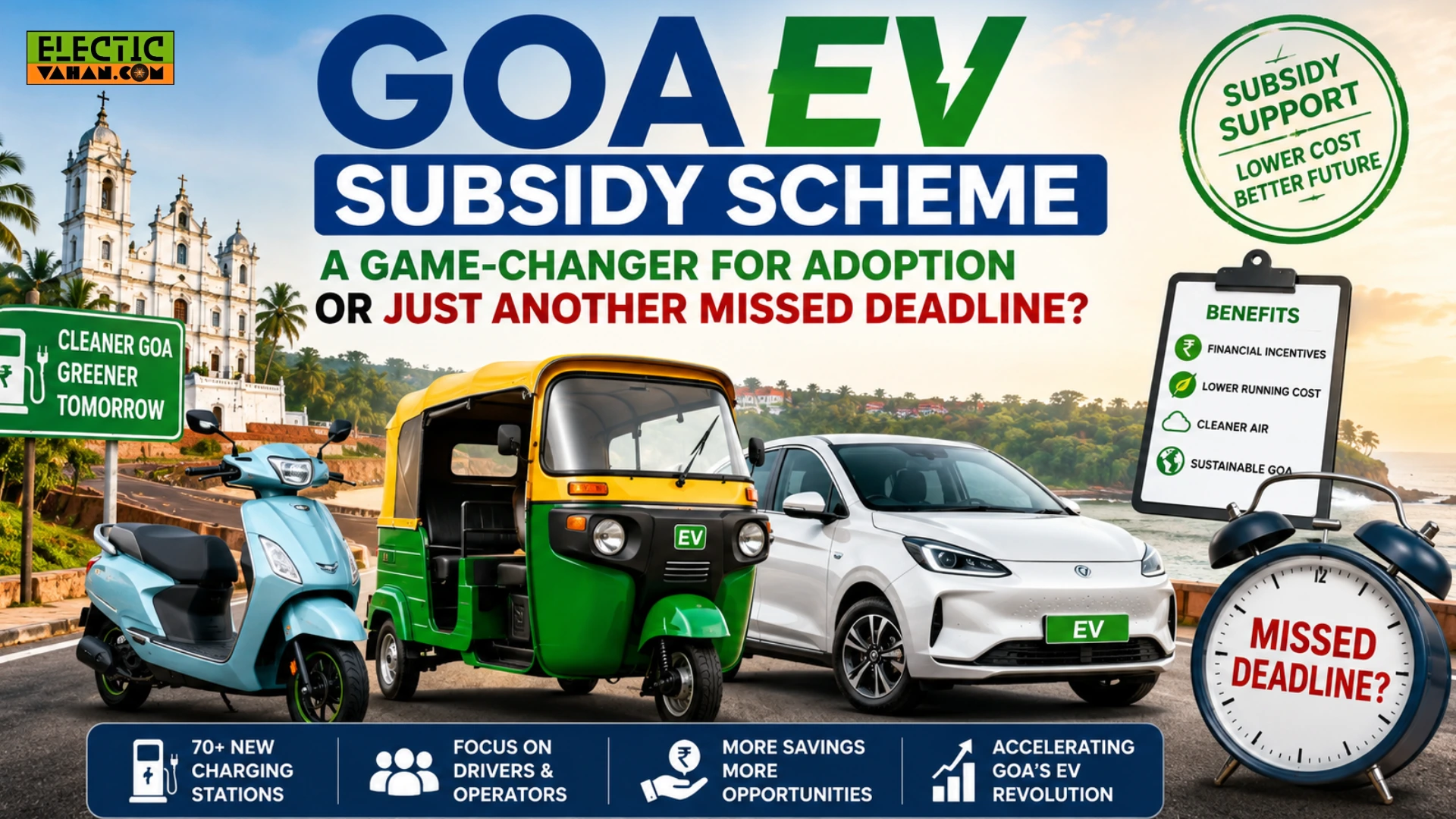
Goa is once again in the spotlight for its electric mobility push, and this time the Goa EV subsidy scheme could be a genuinely transformative move for the state’s commercial transport sector. Reports described an announcement by Chief Minister Pramod Sawant that a new policy is on the anvil, offering subsidies of up to 50 percent on EV purchases for licensed motorcycle pilots and auto rickshaw operators. It sounds promising on paper, but as with many state-level EV schemes in India, the real story lies in the execution. Here’s a complete breakdown of what’s been announced, who stands to gain, and where the uncertainty still lies.
What Is the New Goa EV Subsidy Scheme?
The announcement came during a meeting on Fuel Management and Sustainable Transport Strategy chaired by Sawant at Altinho. He directed the Department of New and Renewable Energy (DNRE) to formulate a comprehensive scheme that would provide up to 50 percent subsidy for the purchase of electric vehicles by licensed motorcycle pilots and auto-rickshaw operators, as part of a broader effort to accelerate the state’s shift to clean mobility.
Alongside this, the DNRE has also been tasked with setting up 70 new EV charging stations across Goa under the Centre’s PM E-Drive Scheme, and drafting a separate policy for phasing out old diesel generator sets used in industrial and commercial establishments. The Goa EV subsidy scheme is clearly being positioned as one piece of a larger clean-energy transition plan, not a standalone announcement.
Who Might Benefit From the Proposed Scheme?
Unlike Goa’s earlier EV promotion policy, which covered private two, three, and four-wheeler buyers broadly, this new Goa EV subsidy scheme is specifically targeted at commercial operators, licensed bike taxi pilots and auto rickshaw drivers. The logic here is straight forward:
these vehicles run almost all day, every day, so switching them to electric power delivers a much bigger cut in fuel consumption and emissions than a private vehicle that sits idle most of the time.
If implemented as announced, eligible operators could receive government support covering up to half the upfront cost of an electric two-wheeler or auto rickshaw. That’s a genuinely significant incentive in a segment where daily earnings are tight and fuel costs eat directly into take-home income.
How Goa’s EV Push Has Evolved Since 2021
Goa’s original EV scheme included battery-linked support. However, an official notice dated 25 July 2022 discontinued that scheme from 31 July 2022, while retaining eligibility for the specified earlier purchase period. The continued presence of old policy documents online does not establish that new purchases qualify today. A later reopening must be supported by its own notification.
The new bike taxi and autorickshaw-focused subsidy essentially builds on this foundation, but with a sharper, more targeted approach aimed at commercial mobility rather than a blanket incentive for all buyers.
What’s Still Missing From the Announcement
Here’s where the uncertainty creeps in. The report described a direction to the DNRE to formulate the scheme. This article has not verified a later notification covering detailed eligibility, subsidy caps, application procedures or implementation timing. Current application availability has not been verified here.
Dealers and operators who’ve seen previous schemes stall at the announcement stage may reasonably stay cautious until the fine print actually arrives. For a policy targeting drivers who depend on their vehicle for daily income, clarity on subsidy disbursement timelines will matter just as much as the subsidy amount itself.
Why This Matters for Goa’s Clean Mobility Goals
Electrifying commercial vehicles can reduce local exhaust emissions. Operators should also assess daily distance, charging access, downtime and servicing costs before choosing a vehicle. The previously stated vehicle-density figure has been removed because its units and source were not verified.
If the Goa EV subsidy scheme rolls out with clear timelines and adequate funding, it could meaningfully accelerate the state’s broader clean mobility targets while also easing the financial burden on gig-economy drivers currently squeezed by rising fuel prices.
Frequently Asked Questions
What is the Goa EV subsidy scheme for 2026? It’s a proposed policy offering up to 50 percent subsidy on electric vehicle purchases for licensed motorcycle pilots and autorickshaw operators in Goa, as described in the report discussed above. An operational claim scheme has not been verified here.
Who is eligible for the new Goa EV subsidy? Currently, the scheme is aimed at licensed motorcycle pilots and auto-rickshaw operators. This article has not verified detailed notified eligibility.
Is Goa’s older EV subsidy scheme still active? Current availability is not established by this article. The 2022 discontinuation notice applies to the original scheme; ask GEDA for any later notification and the purchase dates it covers.
When will the new scheme be implemented? No implementation date has been verified for this article. Check the latest DNRE/GEDA notification.
Will Goa add more EV charging stations too? The report described a plan for 70 stations. This article does not confirm that those stations are operational.
Official Sources and Application Checks
An official 2024 release described an intention to introduce support for rickshaw drivers and motorcycle pilots. That intention is separate from notified eligibility and an application window. Check GEDA’s EV information and request the current notification before relying on a subsidy in your purchase budget. The reported 50% proposal and 70-station plan above are not confirmation of approved payments or operational chargers.