
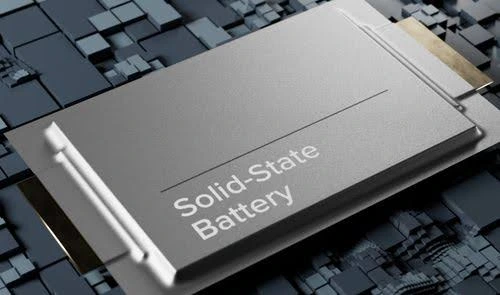
Every few months, a new headline claims that solid-state batteries are about to fix everything wrong with electric vehicles — range anxiety, slow charging, fire risk, all of it. And this time, the hype has some real substance behind it. Automakers from Toyota to Mercedes-Benz have already tested prototype cars using this technology on public roads. But here in India, the picture is far less revolutionary and a lot more “wait and watch.” This post breaks down what solid-state batteries actually are, how close the world is to mass production, and what it genuinely means for Indian EV buyers over the next few years.
What Are Solid-State Batteries?
A conventional lithium-ion battery, the kind sitting inside almost every EV on Indian roads today , uses a liquid electrolyte to move ions between the positive and negative electrodes. That liquid is flammable, which is part of why battery fires make headlines. Solid-state batteries replace this liquid with a solid material, usually a ceramic, polymer, or sulfide-based compound. Because there’s no liquid to leak or ignite easily, these cells are inherently safer, and they can also pack lithium metal anodes instead of graphite, which dramatically boosts how much energy fits into the same amount of space.
Why Solid State Batteries Beat Traditional Lithium-Ion Cells
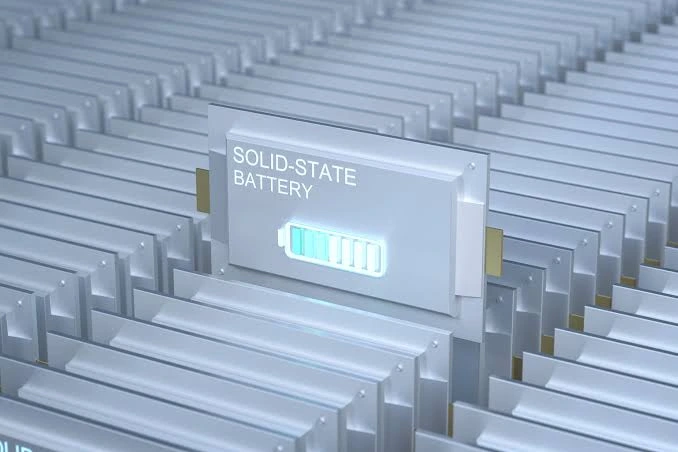
The appeal isn’t just theoretical. Today’s best lithium-ion cells top out around 200–300 Wh/kg of energy density, while solid-state batteries are targeting 400–500 Wh/kg commercially, with some prototypes already touching similar figures in lab conditions. That translates directly into longer driving range without adding extra weight.
Safety is the other big win. Thermal runaway in a standard lithium-ion cell can begin at temperatures as low as 90°C, whereas comparable events in solid-state systems start closer to 247°C — a massive safety margin. Add in faster charging capability and a longer cycle life, and it’s easy to see why this is being called a genuine leap forward rather than just an incremental upgrade.
Who’s Winning the Global Solid-State Battery Race
China currently leads the solid state battery race . The country is preparing its first official solid-state EV battery standard, expected to clarify terminology around liquid, hybrid, semi-solid, and fully solid-state cells. Chinese firms are also pushing hard on production timelines, with several targeting real vehicle integration within the next couple of years.
Meanwhile, Mercedes-Benz, working with US-based Factorial Energy, drove a modified EQS over 1,200 km on a single charge using solid-state cells – on ordinary highways, not a closed test track. Stellantis has since begun on-road testing of Factorial’s cells in North America too. Toyota, Quantum Scape, and Samsung SDI are all racing toward commercial-scale production, though most realistic timelines still point toward 2027 and beyond for actual showroom availability.
Solid-State Batteries in India: Where We Actually Stand
India isn’t manufacturing solid-state batteries at any meaningful scale yet, and it’s important to be honest about that. The domestic battery story right now is still dominated by lithium-ion cell localization- companies like Tata and Exide are focused on building LFP and NMC manufacturing capacity to cut import dependence, not on solid-state chemistry.
That said, the groundwork is being laid. Indian research institutions and startups are exploring solid electrolyte materials, and industry events like the Battery & Energy Storage India Expo are bringing global players, policymakers, and Indian manufacturers into the same room. It’s an encouraging sign, but India’s realistic near-term battery bet is sodium-ion and improved LFP chemistry, not solid-state — especially for two-wheelers and three-wheelers, which dominate India’s EV volumes.
The Roadblocks Nobody Talks About
Manufacturing solid-state batteries at gigafactory scale is genuinely hard. Solid electrolytes are brittle, interfaces between solid materials degrade faster than liquid ones, and production costs remain steep compared to mature lithium-ion supply chains. These aren’t small engineering footnotes — they’re the exact reasons why “commercial solid-state EVs” have been “two years away” for almost a decade now.
For India specifically, add three more challenges: limited domestic expertise in ceramic and sulfide electrolyte manufacturing, a battery ecosystem still catching up on basic lithium-ion cell production, and price sensitivity in a market where affordability often matters more than cutting-edge range. Solid-state batteries will likely arrive in India through imported premium vehicles years before any domestic production begins.
What It Means for Indian EV Buyers Today
If you’re shopping for an EV in India right now, solid-state batteries shouldn’t factor into your decision at all. The technology realistically won’t appear in mass-market Indian vehicles before the early 2030s, and even global timelines keep slipping. Today’s lithium-ion and LFP batteries — when properly maintained — already deliver solid range, safety, and longevity for daily use.
What’s worth watching instead is how sodium-ion batteries and improved thermal management systems roll out in India over the next two to three years, since those are the technologies most likely to actually reach Indian roads first.
Frequently Asked Questions
Are solid-state batteries available in Indian EVs right now? No. As of 2026, no commercially sold EV in India uses solid-state batteries. All current models rely on lithium-ion or LFP chemistry.
Why are solid-state batteries considered safer? They replace the flammable liquid electrolyte found in standard lithium-ion cells with a solid material, which significantly raises the temperature at which thermal runaway can begin.
When will solid-state batteries be available in India? Global automakers are targeting commercial production from 2027 onward, but India-specific manufacturing and vehicle availability will likely take longer, possibly into the early 2030s.
Do solid-state batteries cost more than lithium-ion batteries? Yes, currently. Manufacturing complexity and limited scale make solid-state cells considerably more expensive, which is one of the biggest barriers to mass adoption.
Which companies are leading solid-state battery development? Toyota, Quantum Scape, Factorial Energy, Samsung SDI, CATL, and several Chinese manufacturers are among the frontrunners, alongside automakers like Mercedes-Benz and Stellantis conducting real-world testing.
1 thought on “Solid-State EV Batteries: Benefits and Challenges”