

There’s a particular kind of excitement building around one upcoming car in India right now, and it’s the Tata Safari EV. I’ve been following every update, spy shot, and industry report around this one, and honestly, it makes sense why people are so curious. The Safari name carries a lot of weight in India, and turning it into a full electric SUV is a big deal. In this blog, I’ll walk you through everything we currently know – the expected price, launch timeline, range, features, and how it’s likely to stack up against its rivals.
Why Everyone Is Talking About the Safari EV
Tata already has a strong electric lineup with cars like the Nexon EV, Punch EV, Curvv EV, and more recently, the Harrier EV and tata sierra EV, But none of those are true seven seaters. The Safari EV is expected to become Tata’s first electric SUV with a proper three-row layout, which is a segment that simply doesn’t have a direct rival in India right now at this price point. That alone makes it one of the most significant EV launches expected this year.
Tata Safari EV Expected Launch Date
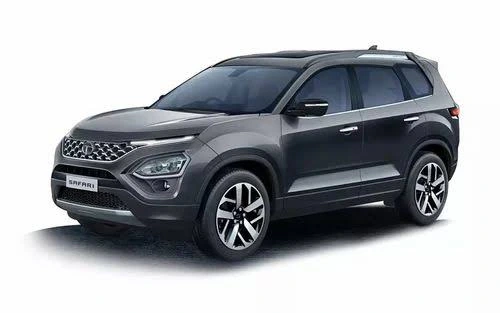
This is where things get a bit interesting, because different reports have pointed to slightly different timelines. Some early estimates suggested a launch as early as mid-2026, while more recent and consistent reports now point toward a festive season launch, likely between October and November 2026, ahead of Diwali. This timing isn’t random — the festive season typically accounts for a huge chunk of India’s annual car sales, and Tata seems to be deliberately timing the Safari EV to make the most of that buying window.
So while there isn’t an official confirmed date from Tata Motors yet, the festive season 2026 window seems to be the most likely and widely reported target right now.
Tata Safari EV Expected Price in India
Price estimates for the Safari EV have varied quite a bit across different reports, ranging anywhere from ₹20 lakh on the lower end to as high as ₹32 lakh on the higher end. However, the more consistent and recent estimates suggest a starting price of around ₹22.5 lakh, going up to somewhere between ₹28-30 lakh for the fully loaded top variant (ex-showroom).
Given that this positions the Safari EV well below premium seven-seater EVs like the BYD eMax 7, while still offering genuine three-row practicality, it could end up being one of the most value-driven electric SUVs in its category, assuming Tata sticks close to these numbers.
Platform, Battery and Expected Range
The Safari EV is expected to be built on Tata’s Gen 2 acti.ev+ platform, which is the same modern EV-specific architecture underpinning the Harrier EV. This is a good sign, because it means the Safari EV isn’t just a petrol SUV with batteries bolted on it’s designed from the ground up as an electric vehicle, which usually translates to better packaging, weight distribution, and efficiency.
Battery options are expected to mirror the Harrier EV as well, meaning we could see 65 kWh and 75 kWh battery pack options, along with both rear-wheel-drive and all-wheel-drive layouts depending on the variant. As for range, the Harrier EV currently offers an MIDC-claimed range between 538 km and 627 km depending on configuration, and the Safari EV’s range is expected to be marginally lower than that, likely still comfortably crossing the 500 km mark on the top spec variant.
Ground clearance is expected to remain close to the petrol Safari’s 205 mm, which is a relief for anyone worried that going electric might compromise the SUV’s ability to handle Indian roads. Spy shots have also shown 18-inch wheels, matching the standard fitment on the current Safari.
Expected Features
While Tata hasn’t released an official features list yet, based on the brand’s current EV lineup and industry expectations, the Safari EV is likely to come loaded with:
- A large touchscreen infotainment system, likely a 12.3-inch unit
- A fully digital driver’s display around 10.25 inches
- Ventilated front and rear seats
- A panoramic sunroof
- Dual-zone automatic climate control
- Level 2 ADAS (Advanced Driver Assistance System)
- A 360-degree camera system with blind spot monitoring
- Up to 7 airbags as part of the safety package
Given that Tata has been consistent about pushing strong safety ratings across its EV range, it’s reasonable to expect the Safari EV to aim for a 5-star Global NCAP or Bharat NCAP rating as well.
Design Expectations
Spy shots so far suggest the Safari EV won’t try to completely reinvent the SUV’s identity. The rear tail lamp design appears to carry over from the current petrol Safari, and interestingly, test mules have already been spotted with “Safari EV” badging clearly visible, which tells us Tata isn’t hiding what this car is. Expect a closed-off grille design, EV-specific styling cues similar to the Harrier EV, and a ride height that’s very slightly lower than the petrol version, likely due to the battery pack sitting under the floor.
How It Compares to Rivals
Once launched, the Safari EV is expected to primarily compete with the Mahindra XEV 9e and Mahindra BE 6, though neither of those offers genuine seven-seat practicality in the same way. The Hyundai Creta Electric and MG Windsor EV are both five-seaters, and the BYD eMax 7, while a seven-seater EV, is priced significantly higher at around ₹41 lakh.
This essentially means that if the Safari EV launches anywhere close to its expected ₹22.5-30 lakh price range, it could be entering a segment with almost no direct competition, which is a genuinely strong position for Tata to be in.
Should You Wait for the Safari EV?
If you’re someone who needs a proper three-row electric SUV and doesn’t mind waiting a few more months, the Safari EV is shaping up to be worth the wait. That said, since none of the details are officially confirmed yet, it’s worth keeping an eye on Tata’s announcements over the next couple of months as the festive season launch window gets closer.
Frequently Asked Questions
Q1. When will the Tata Safari EV launch in India? The Safari EV is expected to launch during the festive season of 2026, likely between October and November, ahead of Diwali.
Q2. What is the expected price of the Tata Safari EV? It is expected to be priced from around ₹22.5 lakh to ₹30 lakh (ex-showroom), based on current estimates.
Q3. What will be the range of the Tata Safari EV? The Safari EV is expected to offer a range of over 500 km on a full charge, slightly lower than the Harrier EV’s claimed 538-627 km.
Q4. Will the Tata Safari EV be a seven-seater? Yes, the Safari EV is expected to be Tata’s first electric SUV with a genuine three-row, seven-seat layout.
Q5. What platform is the Tata Safari EV built on? It is expected to be based on Tata’s Gen 2 acti.ev+ platform, the same architecture used for the Harrier EV.
Conclusion
The Tata Safari EV genuinely has the potential to be one of the biggest EV launches in India this year, simply because it’s targeting a gap in the market that no one else has filled yet. Nothing is official until Tata Motors confirms it, but based on everything reported so far, this looks like a car worth waiting for if you want a spacious, practical, and genuinely electric family SUV.