Data scope: Registration statistics should be checked against the official Parivahan analytics dashboard, with the state, month, fuel and vehicle-class filters recorded. Registrations are not manufacturer wholesale dispatches. This article’s historical extract has not been independently reconciled against a saved dashboard export.
Overview: A Record-Breaking July
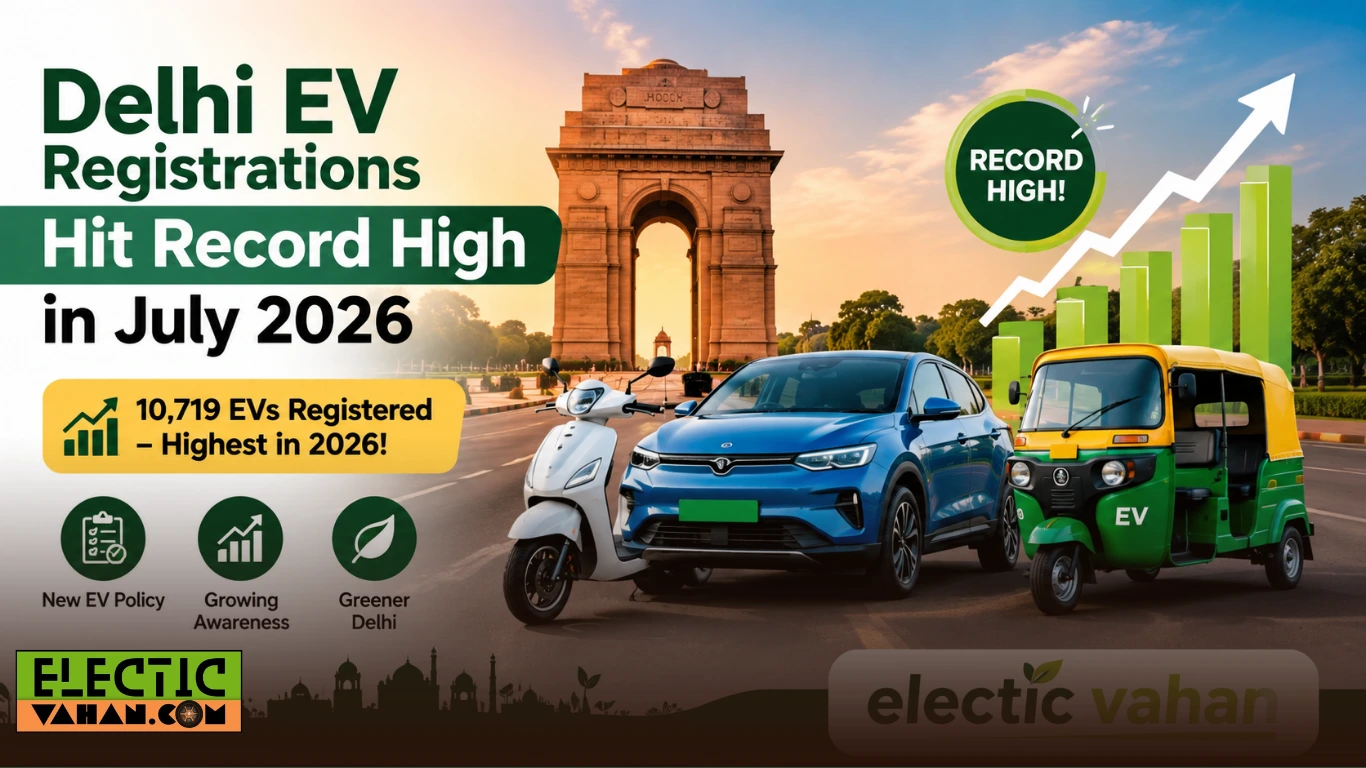
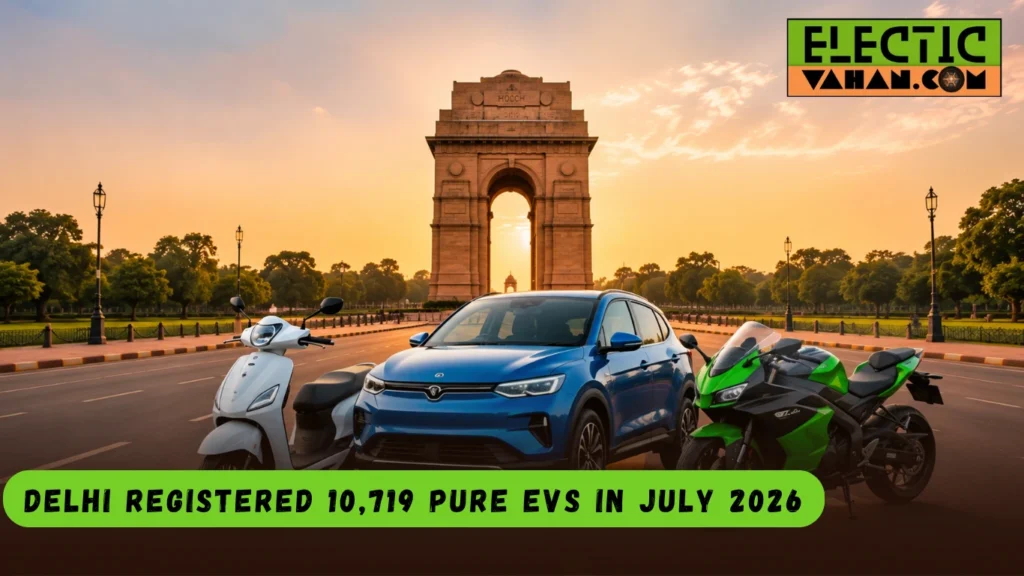
Delhi EV registrations July 2026 touched a remarkable new high, with the national capital logging its best month for electric vehicle uptake so far this year. According to Vahan portal data, Delhi registered 10,719 pure EVs in July 2026, easily crossing the 10,000-unit mark for the first time in 2026. This isn’t a one-off spike – it’s part of a steady climb that has been building since January, and it arrives just as the city rolled out a fresh set of policy incentives.
For anyone tracking India’s EV transition, Delhi’s July numbers are a strong signal that urban India is finally shifting gears, one registration at a time.
The Numbers Behind Delhi EV Registrations July 2026
The scale of growth becomes clear when you line up the monthly figures. Delhi EV registrations climbed from 6,077 units in January to 4,983 in February, then rebounded to 7,324 in March, 7,658 in April, 8,738 in May, and 9,296 in June – before finally crossing into record territory with 10,719 units in July.
That’s a jump of 1,423 units over June alone, and a staggering increase compared to July 2025, when just 6,414 pure EVs were registered in the city. In percentage terms, that’s roughly a 67% year-on-year rise – a pace few other major Indian cities can currently match.
Zooming out further, Delhi’s EV sales have grown 4.5 times over the last six years, from 23,683 units in FY2020 to over 1,07,465 units in FY2026, showing that this July surge is part of a much longer, structural shift rather than a temporary blip.
What’s Driving the Surge?
The single biggest catalyst behind the record Delhi EV registrations July 2026 is the Delhi Electric Vehicle Policy 2026, notified on July 1 and effective through March 2030. Backed by an estimated ₹15,000 crore in incentives and tax exemptions, it’s one of the most ambitious state-level EV policies in the country.
Key highlights of the new policy include:
- Full road tax and registration fee exemption for electric cars priced up to ₹30 lakh (ex-showroom)
- Expanded charging and battery-swapping infrastructure across the city
- Phased restrictions on fossil-fuel vehicles, including a mandate that only electric auto rickshaws can be newly registered in Delhi from January 1, 2027
Unlike the earlier 2020 policy, which leaned mainly on subsidies, EV Policy 2026 combines purchase incentives with regulation-driven timelines ,a shift that appears to be pushing more buyers to make the switch sooner rather than later.
Rising fuel costs and improving vehicle range are also playing a supporting role, nudging even hesitant first-time buyers toward electric options.
Segment-Wise Snapshot
While city-specific segment data for Delhi is still being compiled, the national trend offers useful context. India’s electric two-wheeler segment alone recorded a 68% year-on-year jump in July 2026, with over 1.73 lakh units registered on the Vahan portal nationwide. Given that two-wheelers typically make up the largest share of EV registrations in Delhi, it’s likely they contributed heavily to the city’s record numbers, alongside steady growth in electric cars and rickshaws.
Delhi’s broader EV base has also matured considerably; the city’s overall vehicle ecosystem has expanded well beyond the roughly 1.12 lakh EVs recorded in earlier years, reflecting sustained momentum across every vehicle category.
Challenges on the Road Ahead
Despite the record month, sustaining this growth won’t be automatic. Delhi’s EV Policy 2026 sets an aggressive target of pushing EV registrations toward 95% by 2027, which will require rapid scaling of charging infrastructure, battery-swapping networks, and dealer readiness , especially outside central Delhi.
Air quality remains a core motivator behind the push. Vehicular emissions contribute significantly to Delhi’s pollution load across seasons, and policymakers are betting that regulation-backed EV adoption, not incentives alone, will be needed to meet public health goals in the coming years.
Affordability at the lower end of the car segment, availability of new models, and grid capacity for charging will all determine whether July’s record becomes the new normal or stays a seasonal high.
What This Means for Buyers
For prospective EV buyers in Delhi, the timing looks favorable. With road tax and registration fee waivers currently in effect for electric cars up to ₹30 lakh, and charging infrastructure expanding, the cost of ownership gap between EVs and petrol vehicles continues to narrow. Buyers considering electric two-wheelers or cars in the coming months may want to factor in these incentives before any policy revisions, since regulatory environments tend to tighten once adoption targets are met.
FAQs
Q1: How many EVs were registered in Delhi in July 2026? A total of 10,719 pure EVs were registered in Delhi in July 2026, according to Vahan portal data , the highest monthly figure recorded in the city so far this year.
Q2: Why did Delhi EV registrations hit a record high in July 2026? The record is largely credited to the newly notified Delhi EV Policy 2026, which introduced tax exemptions, registration fee waivers, and expanded charging infrastructure starting July 1, 2026.
Q3: How does July 2026 compare to July 2025? Delhi registered 6,414 pure EVs in July 2025, meaning July 2026’s figure of 10,719 units marks a year-on-year increase of roughly 67%.
Q4: What is the Delhi EV Policy 2026? It’s a state-level policy effective from July 1, 2026 to March 31, 2030, backed by an estimated ₹15,000 crore in incentives, combining purchase subsidies with phased restrictions on new fossil-fuel vehicle registrations.
Q5: Will electric auto rickshaws be mandatory in Delhi? Yes. From January 1, 2027, only electric auto rickshaws can be newly registered in Delhi under the updated policy framework.