
India’s electric vehicle (EV) market is growing at an impressive pace, as India adopts advanced ev battery technology . This is becoming the biggest factor in shaping the future of electric mobility. A recent development suggests that Indian automakers are increasingly adopting advanced EV battery technology through international technology partnerships. This move could significantly improve battery performance, reduce charging time, and make electric vehicles more affordable for Indian consumers.As India works toward becoming one of the world’s largest EV markets, access to modern battery technology is expected to play a crucial role in accelerating EV adoption.
Why Battery Technology Matters
The battery is the heart of every electric vehicle. It directly affects driving range, charging speed, vehicle performance, and overall ownership cost.Many people still hesitate to buy EVs because of concerns such as limited range, long charging times, and battery life. Advanced battery technology aims to solve these challenges by making electric vehicles more practical for everyday use.With improved battery systems, EV owners can travel longer distances, recharge faster, and enjoy lower maintenance costs.
India’s New Approach to Battery Technology
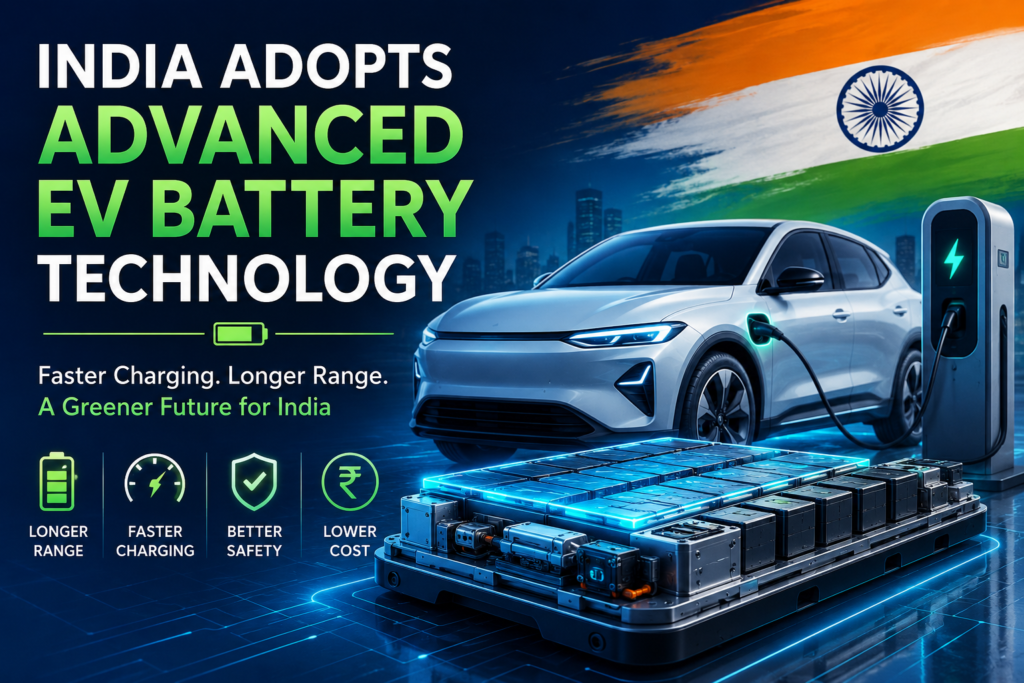
Instead of developing every technology from scratch, several Indian manufacturers are exploring partnerships with global battery and EV technology companies. These collaborations allow Indian brands to access proven battery platforms, battery management systems, and manufacturing expertise.This approach can reduce development time while helping Indian companies launch more advanced electric vehicles within a shorter period.At the same time, Indian manufacturers continue investing in local production and research to strengthen domestic EV manufacturing.
Benefits for Indian EV Buyers
The adoption of advanced battery technology could bring several advantages for customers.
Longer Driving Range
One of the biggest improvements will likely be an increase in driving range. New-generation batteries are designed to store more energy without making the battery pack significantly larger or heavier.This means future electric cars and scooters may travel farther on a single charge, making them suitable for both city commuting and highway travel.
Better Battery Life
Battery durability is another important factor.Advanced battery management systems continuously monitor battery temperature, charging cycles, and power delivery to improve battery health over time.A longer lasting battery also increases resale value and reduces long-term ownership costs.
Improved Safety
Battery safety has become a major focus for the EV industry.Modern battery packs include better thermal management, improved cooling systems, and smarter software that helps prevent overheating and enhances reliability in different weather conditions.These improvements can increase customer confidence in electric vehicles.
Lower Manufacturing Costs in the Future
Another important advantage of technology partnerships is the potential reduction in manufacturing costs.As production volumes increase and battery manufacturing becomes more localized, companies may reduce vehicle prices over time.Affordable pricing is expected to encourage more Indian families to switch from petrol vehicles to electric mobility.
Supporting India’s EV Mission
The Indian government has been actively promoting electric mobility through various initiatives, including support for charging infrastructure, local battery manufacturing, and cleaner transportation.
Advanced battery technology aligns perfectly with these goals by making EVs more efficient and accessible.Combined with investments in renewable energy and charging networks, improved battery technology can help reduce dependence on fossil fuels while lowering carbon emissions.
Challenges Still Remain
Although battery technology is improving rapidly, some challenges still need attention.Charging infrastructure is expanding but remains limited in many smaller cities and rural areas.Battery raw materials such as lithium, nickel, and cobalt continue to face supply chain challenges worldwide. Developing alternative battery chemistries and increasing battery recycling will be important for long term sustainability.Indian manufacturers are also focusing on localizing battery production to reduce dependence on imports and strengthen the domestic EV ecosystem.
What This Means for the Future
Industry experts believe that the next few years could transform India’s EV market.Future electric vehicles are expected to offer:
Longer driving range
Faster charging capability
Improved battery safety
Better software integration
Lower maintenance costs
More affordable prices
These improvements will make electric vehicles attractive to a much larger section of Indian consumers.As battery innovation continues, EVs may eventually become the preferred choice over traditional petrol and diesel vehicles.