
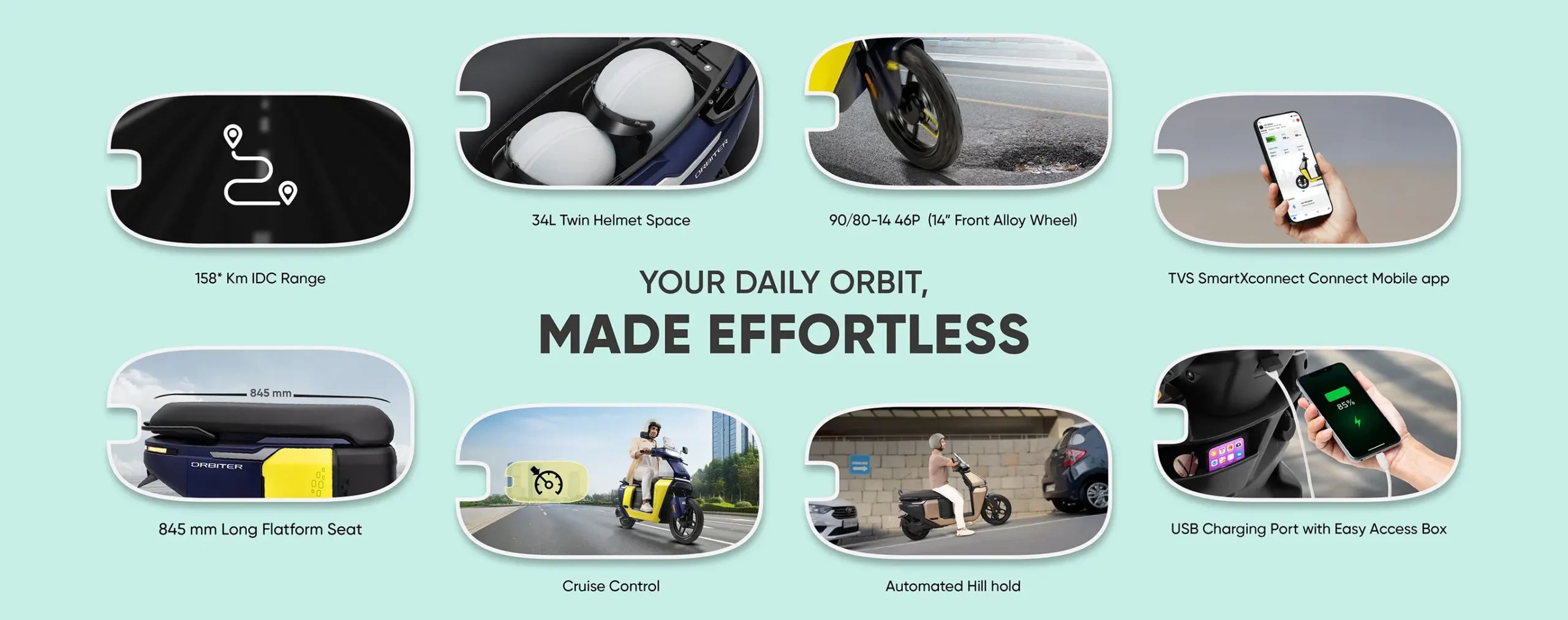
Checked 20 October 2026. The TVS Orbiter V2 is worth researching by its exact variant name, because a base-model price or range figure may describe a different scooter. This guide separates the manufacturer’s published specifications from the decisions you need to make about your own commute, charging access and purchase quotation. It is not an independent road test.
TVS Orbiter V2 specifications at a glance
The TVS Orbiter 3.1 kWh brochure lists a 158 km IDC range, a 650 W charger, approximately 4 hours 10 minutes for 0–80% charging, 34-litre storage and a 14-inch front wheel. Check the current official variant page and the brochure supplied with your quote for any equipment revisions.
Does 158 km mean the same distance on your commute?
No. IDC is a test-cycle claim, not the result of our road test. Your practical planning should account for riding speed, passenger load, route, weather and the reserve you want on arrival. Do not plan an essential daily journey around consuming the entire claimed distance. A longer specification-sheet range is useful context, but it cannot replace checking your normal route.
Write down your return distance and any regular detours before the test ride. If you can get a demonstration on representative roads, note how the scooter feels with the load you normally carry. Treat a short test ride as a check of fit and handling rather than proof of full-charge range. If a dealer offers a real-world estimate, ask how that estimate was obtained.
Check 0–80% charging separately from a full charge
The brochure’s charging figure ends at 80%, so it should not be presented as a 0–100% time. Ask which charger comes with the quoted scooter, what supply is required at your parking space and what the manufacturer says about a complete charging session. Confirm your actual installation arrangement before purchase. Our Orbiter apartment-charging guide addresses the fixed-battery question and parking access.
Compare the V2 quotation rather than a base-price headline
Request the exact V2 designation, city, date and battery ownership arrangement on the quote. Keep registration, insurance, accessories and installation separate. If a battery subscription is offered, compare its full payment schedule with outright purchase instead of comparing only the advertised starting amounts. Our BaaS versus outright worksheet shows the calculation with clearly fictional figures.
What to test before choosing V2
Take your usual helmet and check whether storage works for your belongings. Test whether both feet reach the ground comfortably and whether you can move the scooter in the space where you park. Ask the dealer to demonstrate the features on the actual variant rather than a different display model. Also identify the workshop you would use for routine support.
Choose the variant after comparing your commute, charging access, written price and test-ride experience. If you are still considering other scooters, use the main Orbiter buying guide and electric-scooter comparison checklist to keep the questions consistent.
FAQs
What battery does the TVS Orbiter V2 brochure describe?
The linked manufacturer brochure describes the 3.1 kWh version. Confirm the variant on your quotation.
Is the 158 km claimed range a guaranteed road-test result?
No. It is the brochure’s IDC figure; actual riding conditions and load affect practical range.
Does 4 hours 10 minutes mean a full charge?
The cited brochure labels that estimate 0–80%, not 0–100%.
Should I compare the V2 with the cheapest Orbiter headline?
Only after matching the exact variant, included equipment and battery ownership arrangement.
Featured image: TVS Motor Company, official Orbiter feature artwork. IDC range is a manufacturer test-cycle claim; actual range varies.